I've lived a lot and seen a lot. All of the experiences are stored in my cells. I always say that photojournalism isn’t a job, it’s an all-consuming vocation, a lifestyle—for some it's even a religion.
Ever since its invention in the 19th century, photography has been used to document life. At the same time, it focuses on inviting audiences to a rather subjective world while trying to be taken seriously as an art form. Photography has always been considered a male-dominated profession, but luckily, things are changing. Scholars, writers, bloggers, photography students, and enthusiasts have been giving credit to the female pioneers of the field. Most were always standing and/or hiding in the shadows, oblivious to how much they could claim and accomplish. Arguably, the techniques, concepts, and themes female photographers use differ from those of male photographers. At a time when most women were convinced that their place was in the kitchen and certainly not in the dark room, some were struggling to surpass their male counterparts and work towards gaining respect and recognition for their work.

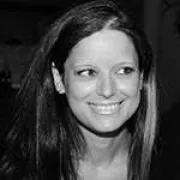
Kate Brooks (American photojournalist and filmmaker, 1977-) grew up in Niagara Falls, New York, and first discovered her passion for photography in a photojournalism course during her freshman year at George Washington University. After studying Russian language and culture, Brooks began working as a photographer in Russia in the years just after the collapse of the Soviet Union. Her most notable work from that period was the haunting images exposing cruelty and neglect in state orphanages that were published worldwide and used by Human Rights Watch to campaign for the rights of orphans.
Following September 11th, Brooks moved to Pakistan to photograph the impact of foreign policy in the region and daily life in Afghanistan. In 2003, she covered the American invasion of Iraq and the beginning of the insurgency for TIME. For more than a decade, she proceeded to work across the region, documenting history as it unfolded for TIME, Newsweek, The Atlantic, The New York Times, The New Yorker, and others.
Brooks has been the recipient of numerous international awards, and her work is regularly published in American and European magazines. Her photographs have also been exhibited in Europe, the Middle East, and the U.S., including at AIPAD, Paris Photo, The Southeast Museum of Photography, The Museum of Fine Arts Houston, Annenberg Space for Photography, Tethys Gallery in Florence, the Jam Jar in Dubai, and Russell Senate Office Building on Capitol Hill.
In 2010, Kate's love for filmmaking was sparked while working as a cinematographer on the documentary The Boxing Girls of Kabul about the female Afghan national boxing team. Her introspective collection of essays and photographs, In the Light of Darkness: A Photographer's Journey After 9/11, was selected as one of the best photography books of the year. In 2012-13, she was a Knight Wallace Fellow at the University of Michigan. There, she researched the global wildlife trafficking crisis before embarking on directing The Last Animals. The documentary premiered at the Tribeca Film Festival on Earth Day and was awarded a Disruptor Award, alongside those who sacrificed their lives protecting Garamba National Park. The film was widely recognized for its ability to disrupt the status quo and change hearts and minds, later winning a Wildscreen Panda Impact Award in consideration with Blue Planet II. The Last Animals was distributed through National Geographic, Hulu, Netflix, Discovery+, and AMC's Sundance Channel.
Following that project, Brooks executive-produced Tigre Gente, a documentary about jaguar trafficking between South America and Asia that was distributed in Latin America by National Geographic. Currently, she has two film projects in development. Kate Brooks' body
photography is human-centered and narrative-driven rather than purely sensationalist or shock-oriented. She emphasizes the impact of conflict on civilians - families, children, and communities - rather than just the combat itself. Her images often portray ordinary moments of life amidst extraordinary circumstances, revealing emotional truths behind headlines. Kate seeks to capture human resilience and experience, bringing forward stories that explore how individuals adapt, survive, and maintain dignity in the face of war and upheaval. Her perspective often highlights the roles and experiences of women, which are underrepresented in traditional war photography.

I seek to find beauty and compassion whenever possible. I believe both qualities help viewers relate to the people in my pictures and reflect upon what they are seeing.

We will continue talking about female names that left their mark on photography and about contemporary female photographers who are still emerging. There are a lot of female photographers out there deserving of praise, and we can only hope to cover as many of them as we can. Please follow this space to find out more.